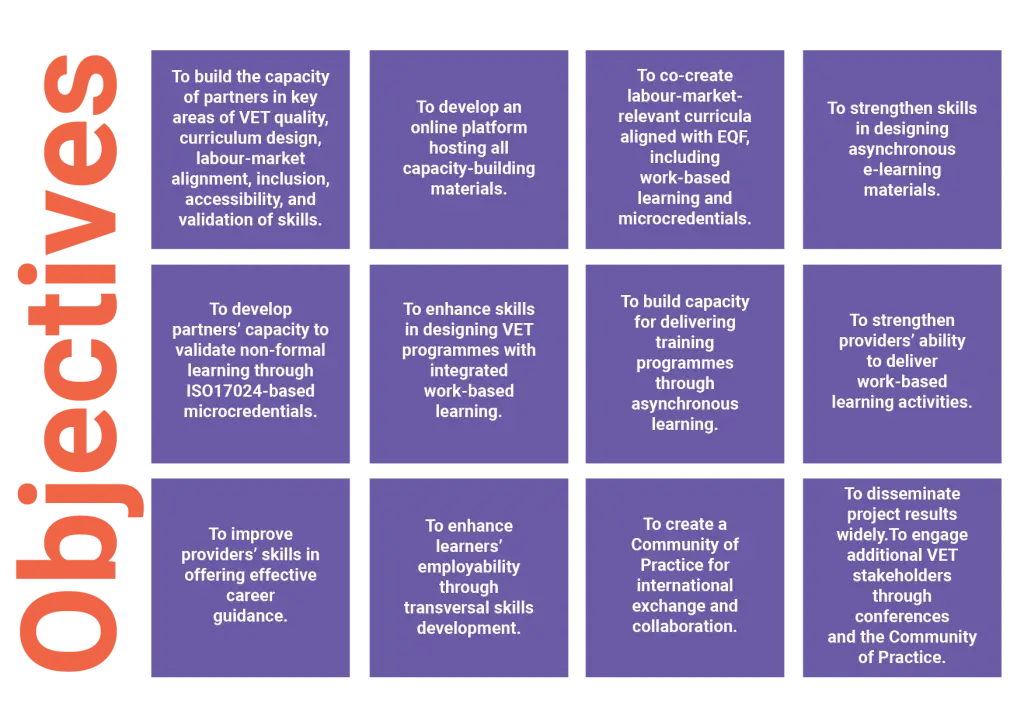
The overall aim of RAPPORT is to strengthen the quality, relevance, and responsiveness of Vocational Education and Training (VET) systems in Albania and Bosnia and Herzegovina, enabling them to better address labour-market needs and socio-economic developments. Recognizing the persistent gaps in quality assurance, curriculum design, skills validation, and links with industry, the project seeks to equip VET providers, trainers, and stakeholders with the knowledge, tools, and capacities required to modernize VET provision.
Through a comprehensive programme of capacity-building workshops, practical co-development of curricula, and the creation of microcredentials in digital, green, and entrepreneurial skills, RAPPORT aims to promote a more inclusive, accessible, and future-oriented VET ecosystem. By fostering strong collaboration between VET providers, chambers of commerce, and other labour-market actors—and by establishing a long-term Community of Practice—the project aspires to build a sustainable framework that improves VET quality, increases employability, and aligns training provision with national and regional development strategies.